
A crack ran through our hearthstone long ago,
And from the fissure we watched gently grow
The tame domesticated danger,
Yet lived in comfort in our haunted rooms.
Till came the Stranger
And the great and the little dooms.
We saw the homeless waiting in the street
Year after year,
The always homeless,
Nationless and nameless,
To whose bare roof-trees never come
Peace and the house martin to make a home.
We did not fear
A wrong so dull and old,
So patiently told and patiently retold,
While we sat by the fire or in the window-seat.
Oh what these suffered in dumb animal patience,
That we now suffer,
While the world’s brow grows darker and the world’s hand rougher.
We bear the lot of nations,
Of times and races,
Because we watched the wrong
Last too long
With non-committal faces.
Until from Europe’s sunset hill
We saw our houses falling
Wall after wall behind us.
What could blind us
To such self-evident ill
And all the sorrows from their caverns calling?
This is our punishment. We came
Here without blame, yet with blame,
Dark blame of others, but our blame also.
This stroke was bound to fall,
Though not to fall so.
A few years did not waste
The heaped up world. The central pillar fell
Moved by no living hand. The good fields sickened
By long infection. Oh this is the taste
Of evil done long since and always, quickened
No one knows how
While the red fruit hung ripe upon the bough
And fell at last and rotted where it fell.
For such things homelessness is ours
And shall be others’. Tenement roofs and towers
Will fall upon the kind and the unkind
Without election,
For deaf and blind
Is rejection bred by rejection
Breeding rejection,
And where no counsel is what will be will be.
We must shape here a new philosophy.
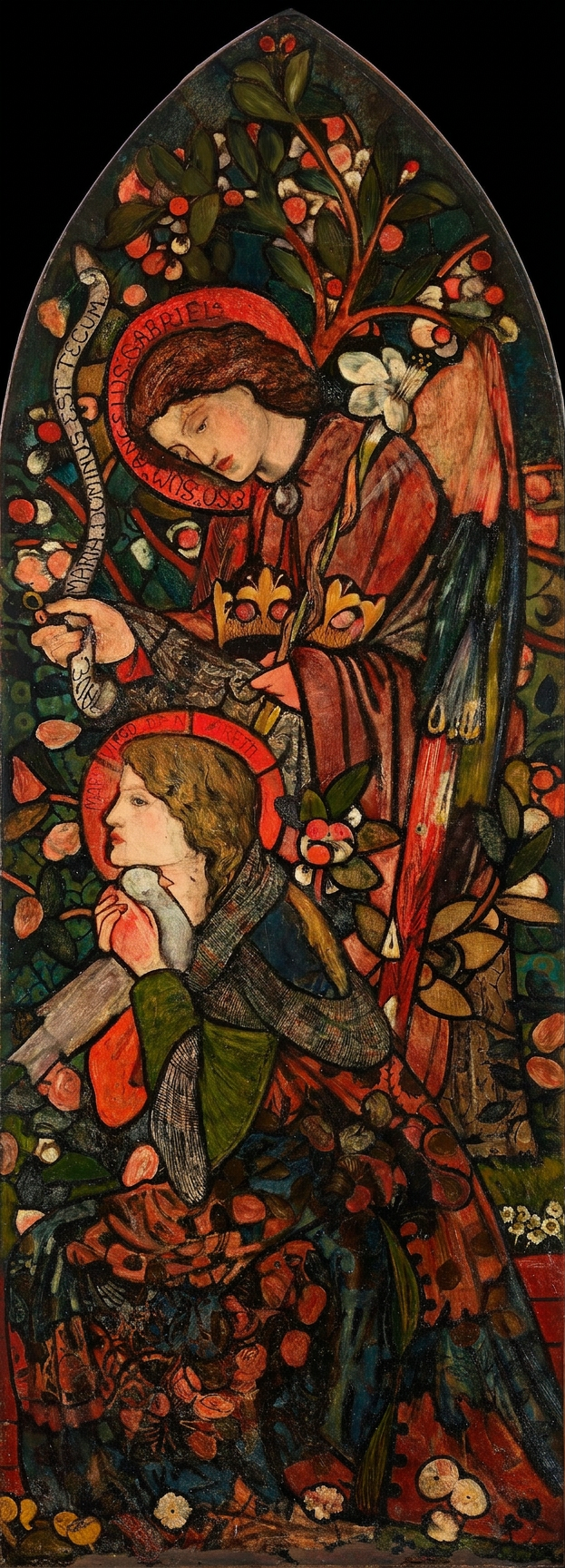
Muir’s words here, rooted in urban life, seem to contrast with his pastoral upbringing. In city after European city (beginning in Glasgow), he seems to have been struck by the profound nature of being homeless. It seems no less profound today. And Muir struggled with his faith no less than the rest of us. He did not seem to find it all in the Calvinism of his home. But something more of it in Rome, and, it is said, in the story of Gabriel meeting Mary. And so I’ve also included here Sir Edward Burne-Jones’ ‘The Annunciation’ – humble, kind, and curious.
Taken from Selected Poems, a slim little paper back edited by Mick Imlah.


Leave a Reply